Explore Sierra de Irta Natural Park near Alcoceber. 13 km of wild coastline, hiking trails, hidden coves, and rich wildlife. Hotel Sancho III is the closest hotel.
Sierra de Irta Natural Park: Spain's Last Unspoiled Mediterranean Coastline
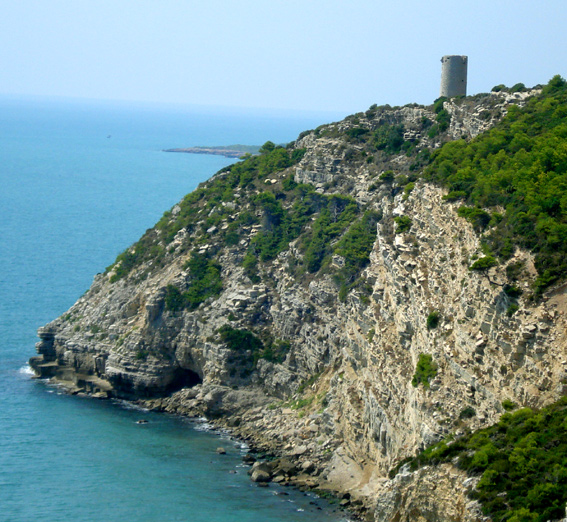
Stretching 13 kilometres between Alcoceber and Peniscola, the Sierra de Irta Natural Park is one of the final stretches of completely undeveloped Mediterranean coastline on mainland Spain. There are no roads along this shore, no apartment blocks, no beach bars — just rugged limestone cliffs, hidden coves with turquoise water, Aleppo pine forests, and the calls of peregrine falcons overhead. With 7,744 hectares of protected land and a further 2,448 hectares of marine reserve, this is nature in its purest form. Hotel Sancho III is the closest hotel to the park entrance, making it the ideal base for exploration.
Landscape and Geography
The Sierra de Irta is a low coastal mountain range that rises directly from the sea, reaching a modest 572 metres at its highest point. What it lacks in altitude it makes up for in drama: the seaward side drops steeply to the water, forming cliffs, rocky platforms, and tiny sand-and-pebble coves accessible only on foot or by kayak. Inland, the terrain softens into rolling hillsides covered in Mediterranean scrub — rosemary, thyme, lavender, and dwarf fan palms.
Wildlife and Nature
The park's isolation has preserved a remarkably intact ecosystem:
- Birds — Bonelli's eagle, peregrine falcon, European bee-eater, Sardinian warbler, and blue rock thrush. Spring migration (March to May) is the best time for birdwatching.
- Reptiles — ocellated lizard, Montpellier snake, and the Mediterranean chameleon, one of Europe's rarest reptiles.
- Marine life — the offshore marine reserve protects Posidonia seagrass meadows, grouper, octopus, barracuda, and colourful nudibranchs. Snorkelling in the coves is outstanding.
- Flora — Aleppo pine, wild olive, mastic, and over 600 recorded plant species, including several endemic to the Valencian Community.
Top Trails and Viewpoints
The park has a network of well-signed trails for hiking and mountain biking:
- Cala Mundina trail (4 km round trip, easy) — a gentle path from the Alcossebre side down to one of the prettiest coves in the park. Great for swimming.
- Xivert Castle loop (8 km, moderate) — climbs to the ruins of the 12th-century Templar castle with panoramic views stretching to the Columbretes Islands on clear days.
- Coastal path to Torre Badum (10 km one way, moderate to challenging) — follows the cliff edge from Alcossebre southwards past watchtowers and secluded beaches.
- Summit route to El Campanario (12 km, challenging) — reaches the highest point in the range with 360-degree views of the coast, the Maestrazgo mountains, and the sea.
Hidden Coves Worth Finding
The park's coastline conceals dozens of small coves, many reachable only on foot. Highlights include:
- Cala Mundina — pebble cove with crystal water, sheltered from the wind.
- Cala Argilaga — a tiny gem framed by red cliffs, popular with snorkellers.
- Playa del Russo — a slightly larger sandy beach, quieter than the town beaches.
Practical Information
- Distance from Hotel Sancho III: The nearest trailhead is roughly 2 km (5 minutes by car or a 20-minute walk).
- Best seasons: Spring (March to May) for wildflowers and birding; autumn (September to November) for pleasant hiking temperatures. Summer is fine for the coves but start hikes early to avoid midday heat.
- What to bring: Sturdy walking shoes, at least 1.5 litres of water per person, sun hat, sunscreen, and a swimsuit for the coves. There are no shops or water sources inside the park.
- Free entry: The park is open year-round with no admission fee.
Your Base at Hotel Sancho III
After a day trekking through the Sierra de Irta, return to Hotel Sancho III for a cooling swim in the pool, a shower in your sea-view room, and a well-earned dinner. No other hotel puts you this close to one of the most special natural parks on Spain's entire Mediterranean coast.
Ready to explore?
Book your stay at Hotel Sancho III